

Water is water – or isn’t it? Actually, you would think that there is no significant difference when it comes to water. Wrong thinking, because in addition to mineral water, which is enriched with cations and anions of various molecules in nature, and distilled water, which is roughly free of these, there is also so-called ultra-pure water .
This particularly pure water, also called deionate, is the pure chemical compound H2O, without any foreign substances. Ultrapure water is created using a variety of water treatment processes, which are also used in combination. These include ion exchange processes, distillation, sterilization, reverse osmosis or photooxidation.
How exactly is pure water created?
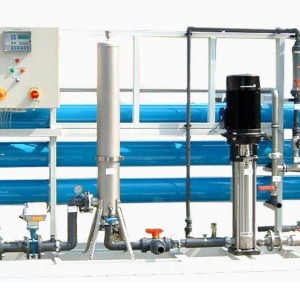
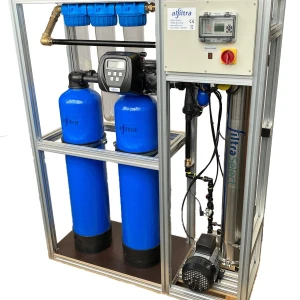
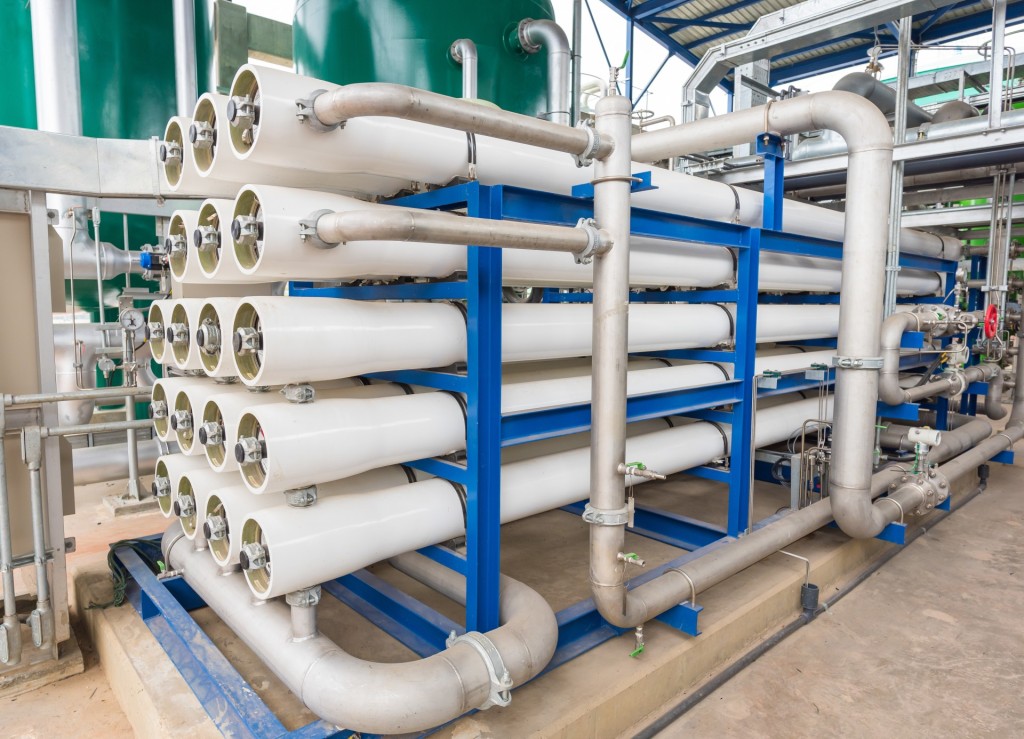
The water treatment process usually consists of two steps. First, normal tap or ground water is demineralized using membrane filtration, UV and ozone systems or ion exchangers, which significantly reduces the conductivity. In membrane filtration or reverse osmosis, the first step in water treatment, the natural osmotic pressure is exceeded by external pressure, so that a separation is created within the reverse osmosis system into a highly concentrated and a purified substance. The membrane, which acts as a separator, collects the dissolved substances. The ion exchanger is used to remove salts, i.e. cations and anions, for water treatment. Irradiation with a UV clarifier is biological purification, which helps to kill bacteria in the water and reduce their concentration for water treatment. This achieves a basic preparation of the water, but further water treatment must be carried out to further reduce the conductivity. The second step is then to produce ultrapure water using mixed-bed ion exchange or electrode ionization. In complex procedures, H+ and OH- ions are brought into balance and another highly complex desalination process is carried out in order to obtain the prescribed, very low conductivity.
Of course, the ultrapure water obtained in this way differs greatly from distilled or demineralized water. This can be seen primarily from the low conductivity, which is crucial for the water molecule's willingness to react as an ampholyte (substance that reacts with itself). Ultrapure water is particularly in demand in medicine for the production of orally administered medications and infusions. The deionate is also used in the semiconductor industry to produce computer chips or solar cells.