


The yield of a reverse osmosis system
Jan 31, 2024, 14:50:10
Synthetic membranes are used in water treatment systems that work on the principle of reverse osmosis. These membranes are permeable to water molecules. The ingredients dissolved in the water are retained by the membranes. The concentrated solution (e.g. drinking water or process water) flows over this membrane at high pressure. This results in the separation of this solution into a partial stream with water in which the retained ingredient (concentrate) is located.
What does the yield mean?
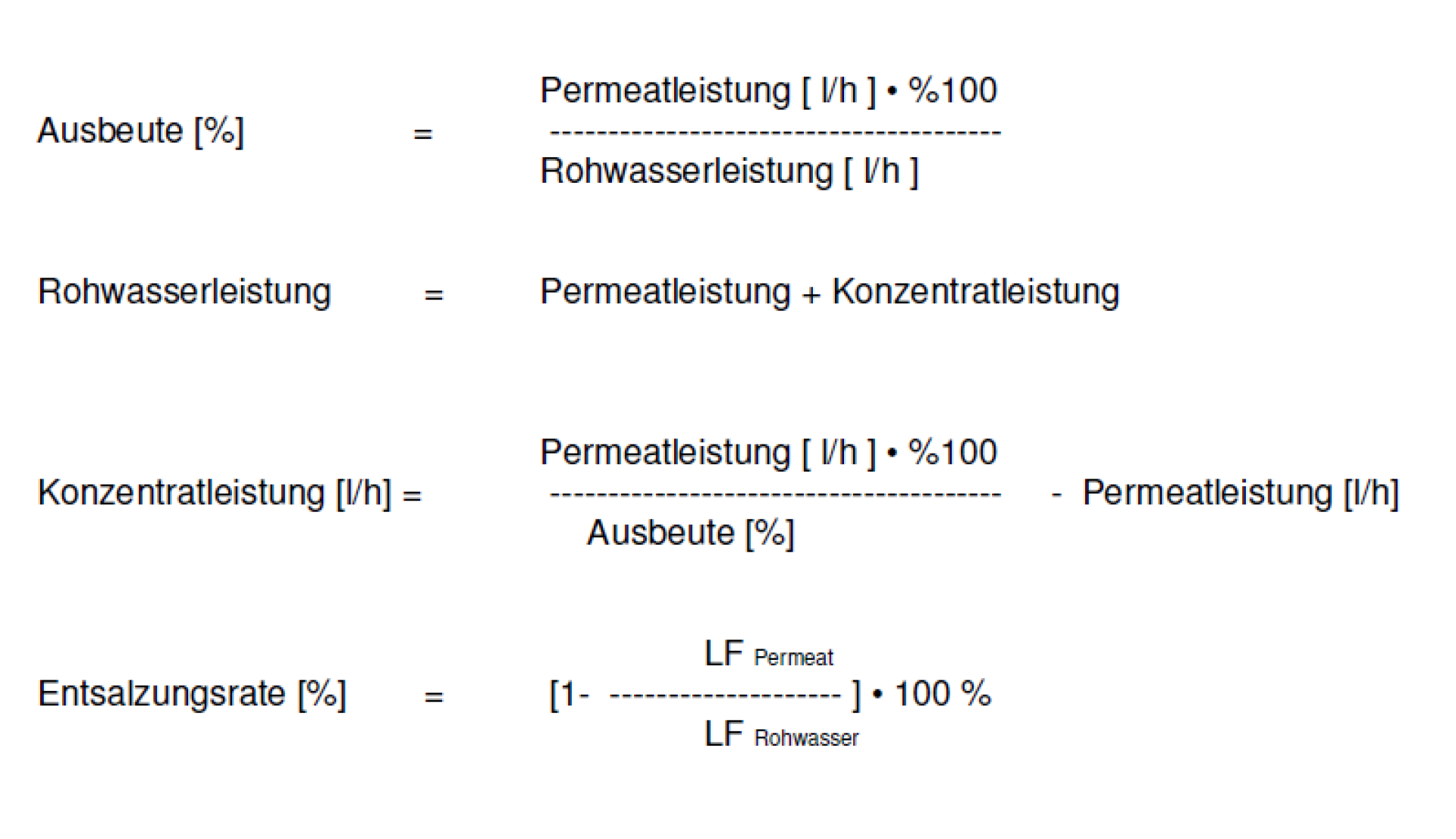
The yield indicates the ratio of permeate to raw water. For example, a yield of 80% means that 80 liters of permeate can be produced from 100 liters of raw water. The higher the yield, the less wastewater (concentrate) the system produces.
Temperature dependence of the permeate performance
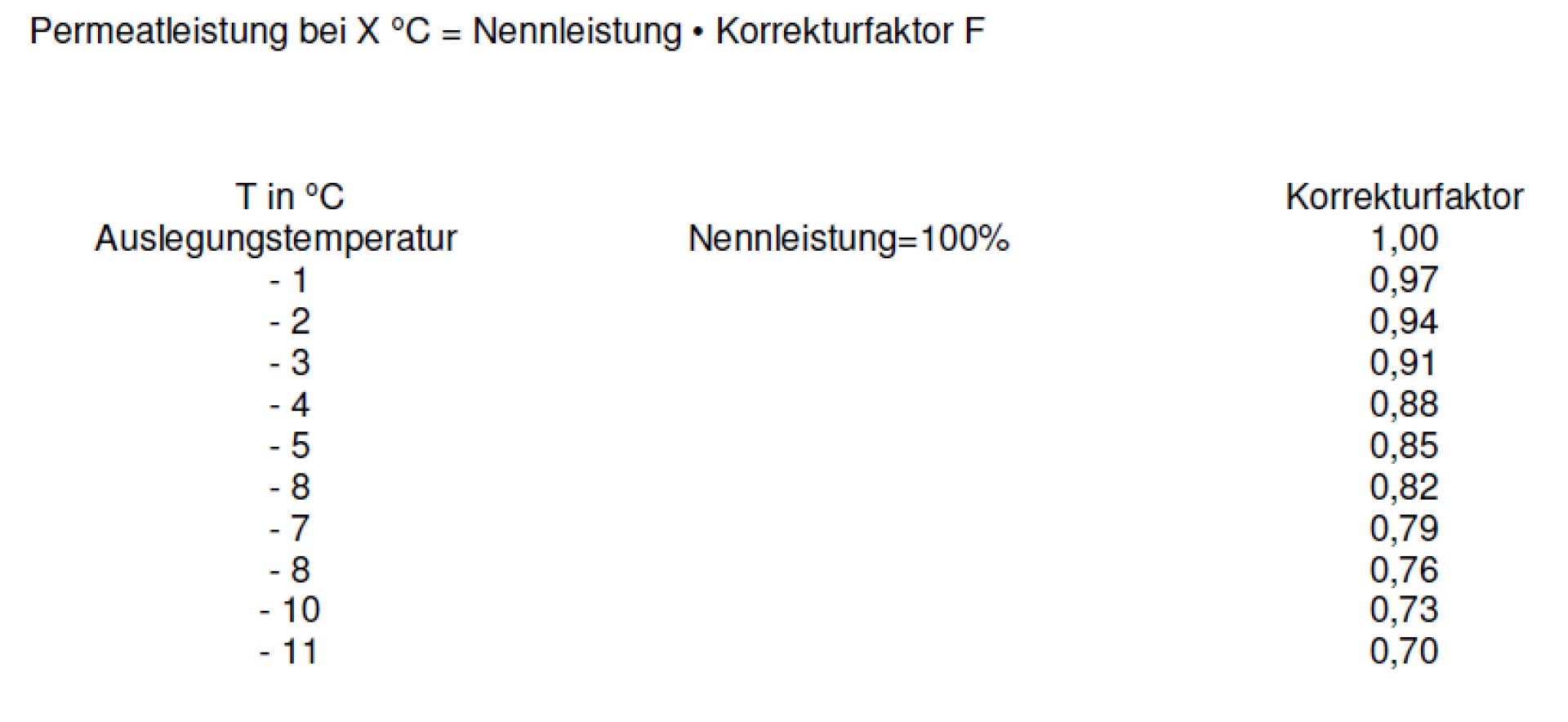
The permeate output of a reverse osmosis system depends on the feed water temperature. The nominal power specified in the technical data and on the nameplate always refers to an additionally specified design temperature. The actual performance at a specific feed water temperature must be calculated using a correction factor from the following table. The respective temperature-related permeate output is calculated according to the following calculation equation:
You may also be interested in
für den PrivatgebrauchReverse osmosis systems for industry and commerce
Plug & Play complete systems with softening
Zubehör für Osmoseanlagen
Water treatment